
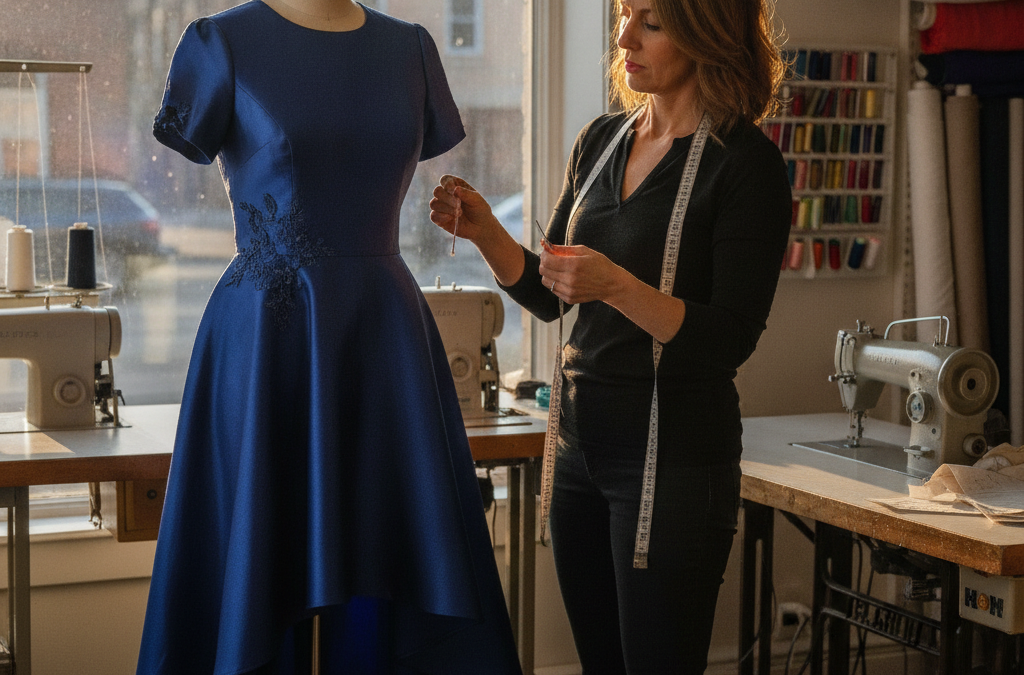
Can a Tailor Alter a Cocktail Dress for a Different Occasion? What Danbury Women Should Know About Restyling Formal Wear
Yes — and honestly, it happens more often than you might think. That cocktail dress you wore to a holiday party or a rehearsal dinner last year? A good tailor can restyle, shorten, re-line, or restructure it so it reads completely differently for a new event. If you’re in Danbury or anywhere in the surrounding area and you’ve got a dress sitting in your closet that you love but can’t quite justify wearing again as-is, the answer usually isn’t to go shopping. It’s to come in for a fitting.
Why Restyling a Cocktail Dress Is More Common Than You Think
Think about how many times you’ve bought something beautiful for one specific event — a friend’s wedding, a holiday gala, a work dinner — and then hung it up afterward, telling yourself you’d wear it again someday. Most people never do. Not because they don’t love the dress, but because it feels too associated with that one moment, or the length isn’t quite right for a daytime event, or the neckline is too formal for a summer garden party.
The good news is that most of those issues are fixable. A cocktail dress that hits the knee might get shortened into a flirty above-the-knee length for a summer occasion. A heavily embellished bodice that felt appropriate for a formal gala might get re-lined or lightened for a more casual celebration. A midi-length dress with a dramatic slit can be altered to read as a brunch outfit rather than a cocktail hour look — it’s all about proportion, hemline, and how the silhouette lands on your specific body.
What Kind of Alterations Actually Transform a Cocktail Dress?
Not every alteration is about fit — some are genuinely about changing how a garment presents itself. Here are the most common ways a skilled tailor can help you get more mileage out of a cocktail dress:
- Shortening the hem: This is the most common request. A tea-length or below-the-knee dress shortened to a true cocktail or mini length can feel like an entirely new garment — more playful, more modern, more appropriate for a casual summer event versus a formal one.
- Adding or removing a lining: A dress that feels too sheer or too stiff for a new occasion can often be re-lined or have its lining removed to change the drape and feel entirely.
- Adjusting the neckline: A deep V or a plunging back that felt right for a certain event might not be what you want for a work function or a daytime event. A tailor can add a modesty panel, insert a small section of matching fabric, or modify the silhouette with a few careful stitches.
- Taking in or letting out the bodice: Bodies change — especially if the dress hasn’t been worn in a year or two. Getting the bodice re-fitted to your current measurements makes the dress look intentional and tailored rather than borrowed.
- Replacing or repairing a zipper: A stuck or broken zipper is often all that’s keeping a dress in the closet. A simple zipper replacement can bring a dress back into rotation almost immediately.
- Removing embellishments: Sometimes a dress is beautiful underneath all the beading or appliqué — stripping decorative elements down can simplify a look and make it appropriate for more occasions.
What a Tailor Is Actually Looking For When You Bring In a Dress to Restyle
When you bring a cocktail dress to Amina’s, the first thing we do is look at the fabric and the construction — not just the style. Fabric matters enormously here. A silk charmeuse dress gives you far more flexibility than a heavily structured duchess satin, which can be unforgiving once you start moving seams. A stretch crepe or jersey cocktail dress is often the easiest to work with because the fabric moves well and the seam allowances are predictable.
We’ll also look at how much seam allowance was left in the original garment — especially important if you want to let something out rather than take it in. Fast fashion brands often leave almost no seam allowance, which limits what’s possible. A well-made dress from a reputable designer or boutique usually has more room to work with.
From Ridgefield to New Milford, we see a lot of dresses that were purchased at the Danbury Fair Mall or ordered online that come in needing this exact kind of evaluation. Don’t assume the alteration can’t be done until someone actually looks at the seams.
The Restyling Question Competitors Rarely Answer: Can You Change the Silhouette Entirely?
This is worth addressing directly, because it’s something most local tailor shop websites don’t touch — and it’s a question we get more than you’d expect.
Can you take a fitted sheath cocktail dress and make it more A-line? Can you remove a peplum? Can you convert a one-shoulder dress into something with two straps? The honest answer is: sometimes yes, and sometimes no — and it depends entirely on the construction of the original dress and how much of the original seaming can be reworked without compromising the structure.
Removing a peplum from a peplum-waist dress, for example, is often very doable — you’re essentially detaching an added fabric panel and re-finishing the seam. Converting a sheath into a true A-line is much harder, because that silhouette change requires altering the fundamental pattern of the skirt. It can be done, but it’s closer to custom dressmaking than standard alteration — and it should be priced accordingly.
The right tailor will be honest with you about what’s realistic. If a structural change would require more work than the dress is worth, or if the risk of damaging the fabric is too high, we’ll tell you. That honesty is part of the service.
Timeline and What to Expect
Most cocktail dress restyling projects — hemming, taking in the bodice, replacing a zipper, adjusting a strap — can be completed within one to two weeks. More complex work, like removing embellishments or adjusting a neckline on a heavily structured gown, may take a bit longer depending on the season.
Spring and early summer are the busiest times of year for alterations in the greater Danbury area, between wedding season and prom. If you have an event in June or July, don’t wait until May to come in. The earlier you bring the dress in for a consultation, the more time there is to do the work right without rushing.
If you do have a tight deadline — a Newtown event that crept up faster than expected, or a last-minute Bethel gathering — ask about rush availability. Rush services are often possible, though they may carry a small additional fee depending on the scope of work and timing.
Frequently Asked Questions
Can a tailor shorten a cocktail dress without it looking uneven?
Yes — as long as the original hem is consistent and the fabric doesn’t have a pattern that needs to be matched carefully. A professional tailor will measure from your natural waistline down to ensure an even hem all the way around, not just pin it from the bottom up.
Will altering a cocktail dress damage the original garment?
If done properly, no. That said, some fabrics — particularly those with embellishments near seams, or very delicate sheers — require more careful handling. A good tailor will tell you upfront if there’s any risk before touching a stitch.
How much does it typically cost to restyle a cocktail dress?
It depends on the complexity of the work. A simple hem shortening is one of the more affordable alterations. Bodice adjustments, lining changes, or structural modifications cost more and take longer. The best approach is to bring the dress in and get a proper estimate — there’s no commitment required at a consultation.
I bought a cocktail dress online that doesn’t fit quite right. Can it be altered?
Almost certainly. Online sizing is notoriously inconsistent, and most dresses can be taken in at the waist, adjusted through the bodice, or hemmed to a better length. The key is bringing the dress in as soon as it arrives — the sooner you know what needs to change, the more time there is to do it right.
Can Amina’s Alterations help if I’m not sure what I want done?
Absolutely. Bring the dress in and we’ll look at it together, talk about where you’re wearing it and what’s not quite working, and go from there. Sometimes the fix is obvious once the dress is on — and sometimes a small adjustment you hadn’t considered makes all the difference.
Don’t Let a Good Dress Sit in Your Closet
Buying new formalwear for every occasion is expensive, and frankly, it’s unnecessary when you already own something you love. Whether you’re in Danbury, coming in from Fairfield County, or just passing through on the I-84 corridor, Amina’s Alterations is here to help you get real, lasting use out of the clothes already hanging in your closet.
Bring in your cocktail dress — or any formalwear you’re not sure what to do with — and let’s take a look together. Contact Amina’s Alterations to schedule a fitting or consultation. No obligation, no pressure — just honest advice from someone who cares about getting the fit exactly right.