How Does Custom Dressmaking Work? What Danbury Women Should Know Before Ordering a Made-to-Measure Garment
Custom dressmaking is exactly what it sounds like — a garment built for your body, your occasion, and your vision, from the ground up. No sizing charts, no returning something that almost fits, no settling. If you’ve been curious about having a dress made from scratch but weren’t sure how the process actually works, you’re not alone. Many women in Danbury and the surrounding area — Bethel, Newtown, Ridgefield, New Milford — have never gone through a custom dressmaking consultation before and simply don’t know where to begin. This guide walks you through it, step by step, so nothing surprises you.
What Happens at Your First Custom Dressmaking Consultation?
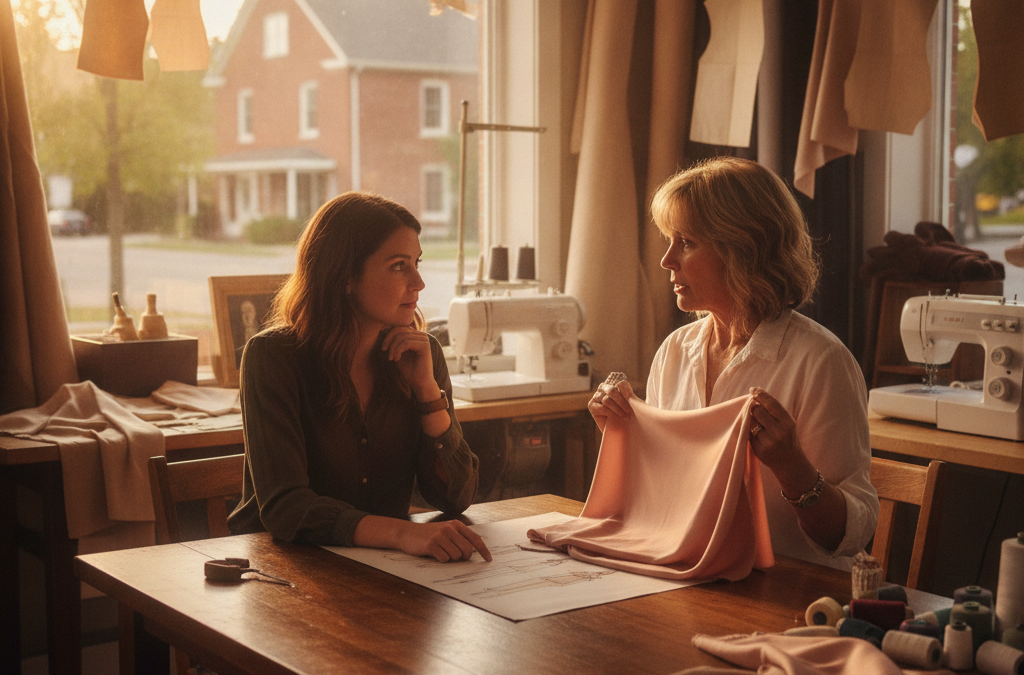
Your first appointment is really a conversation. Before any fabric is cut or any measurements are taken, a skilled dressmaker wants to understand what you’re making and why. Is this a wedding guest dress? A mother-of-the-bride gown? An evening dress for a work gala or a milestone birthday? The occasion shapes almost every decision that follows — the silhouette, the fabric weight, the structure, the timeline.
Bring whatever inspiration you have. A photo on your phone is perfectly fine. It doesn’t have to be a formal mood board — even a screenshot of something you saw on Pinterest or a dress you loved on someone else works. What you’re giving the dressmaker is a sense of direction: the neckline you prefer, the sleeve length, whether you want something structured or soft, form-fitting or fluid.
From there, your measurements are taken — and this is one of the real advantages of custom work. Your actual body proportions guide the pattern, not a standard size 8 or 12 that gets adjusted after the fact. If you carry your measurements differently in the bust versus the hip, or if you have a longer torso or shorter arms — all of that gets built in from the start.
Choosing Your Fabric: What You Actually Need to Know
Fabric selection can feel overwhelming if you’ve never done it before, but a good dressmaker walks you through it without jargon. The main things to consider are drape, weight, and how the fabric photographs or moves in person. A stiff brocade will hold a structured silhouette beautifully but won’t flow the way a bias-cut charmeuse does. A floral cotton voile is lovely for a summer garden party but won’t read as formal at an evening event.
You don’t need to arrive knowing fabric names. What helps more is being able to describe how you want the dress to feel when you wear it — do you want something that skims the body or moves away from it? Something lightweight or with a bit more substance? Do you run warm? These practical details guide the fabric conversation just as well as knowing the difference between crepe and chiffon.
Budget also factors into fabric choice, and an honest dressmaker will tell you when a fabric you love might not behave well in the cut you’re imagining — or when a more affordable alternative can achieve the same effect.
The Fitting Process: What to Expect Between Consultation and Completion
Custom dressmaking typically involves at least two fittings, and sometimes three — depending on the complexity of the design and how much fine-tuning is needed. Here’s roughly how that progression looks:
- First fitting (muslin or basted stage): An early version of the garment — often in an inexpensive test fabric called a muslin — is tried on to check the overall fit and proportion before anything is cut in your final fabric. This is where major structural adjustments happen.
- Second fitting (primary fabric): The real dress is taking shape. You’re checking the fit in the actual fabric, evaluating the drape, and making smaller refinements — adjusting a seam here, repositioning a zipper there.
- Final fitting: This is the polish pass. Hems are confirmed, closures are checked, and you try the dress on with the shoes and undergarments you plan to wear. Everything should feel finished and feel right on your body.
Plan to wear — or bring — the shoes you intend to wear with the finished garment to at least one of your fittings. Hem length changes meaningfully with heel height, and you don’t want that to be a surprise on the day of your event.
How Long Does Custom Dressmaking Take?
This is one of the most common questions, and the honest answer is: it depends on the garment. A simple sundress with clean lines and minimal structure can come together in two to three weeks. A formal gown with boning, a lining, and detailed seaming could take six to eight weeks from first consultation to final fitting — sometimes more during the spring wedding and prom season peak, when demand across Fairfield County runs high.
The general rule is to start earlier than you think you need to. If you have a specific event date in mind — a fall wedding, a holiday gala, a spring graduation dinner — working backward from that date by at least two months gives you comfortable breathing room for fittings and any adjustments. Rushing a custom garment leads to compromises you’ll notice every time you wear it. Rush services are available for genuine time crunches, but that’s not where you want to be if you can avoid it.
Custom Dressmaking vs. Buying Off the Rack and Altering — Which Makes More Sense?
This question comes up often, and the answer really depends on what you’re trying to accomplish. If you’ve found a dress you love in a store and it fits reasonably well in one or two key areas, alterations are often the smarter and faster path. But if you’ve been shopping for months and can’t find anything that works — because your proportions are unusual, because you have very specific style requirements, or because you simply want something that exists nowhere else — custom dressmaking solves the problem that retail can’t.
It’s also worth considering for sentimental or milestone occasions. A dress you have made from scratch, in fabric you chose, cut to your exact measurements, for a specific meaningful moment — that’s a different experience than anything you’ll pull off a rack. Women in Ridgefield and New Milford who’ve had formal dresses or wedding guest gowns made often say the same thing afterward: they wish they’d done it sooner.
What to Bring to Your First Appointment
You don’t need to arrive fully prepared — the consultation exists to help you figure things out. But these items make the first appointment more productive:
- Any inspiration photos you’ve saved, even loosely related ones
- The shoes (or a similar heel height) you plan to wear with the finished piece
- Any undergarments or shapewear that will affect the fit — strapless bras, slips, etc.
- A clear sense of the occasion, the date, and the setting (indoor, outdoor, formal, casual-formal)
- Your honest budget range — this helps narrow fabric and construction choices early
Frequently Asked Questions About Custom Dressmaking Near Danbury
How much does custom dressmaking typically cost?
Pricing varies widely depending on the complexity of the design, the fabric selected, and the number of fittings involved. A simple made-to-measure dress will cost less than a structured formal gown. The best way to get an accurate sense of cost is to schedule a consultation — that way the estimate reflects your actual garment, not a generic range. For a general overview of how Amina prices her work, visit the pricing guide.
Can I bring fabric I already own?
Yes, absolutely. If you’ve found fabric you love — maybe something you purchased on a trip, inherited, or sourced yourself — bring it in. The dressmaker will assess whether the yardage is sufficient for your design and whether the fabric suits the construction you have in mind.
What if I change my mind about the design partway through?
Minor adjustments mid-process are common and usually easy to accommodate — especially before the final fabric is cut. Larger design changes after construction has begun may affect the timeline or cost. The consultation and muslin fitting stages exist precisely to catch these moments early, before anything is finalized.
Do you make custom dresses for bridesmaids or wedding parties?
Yes. Custom dressmaking works for bridal parties as well as individual commissions. Coordinating a group means additional lead time — scheduling multiple fittings across a group of women from Bethel, Newtown, or anywhere else along the I-84 corridor takes planning. Start the conversation as early as possible if you’re considering this for a wedding party.
I’ve never had anything custom-made before. Is a consultation intimidating?
Not at all — and that’s the honest truth. Most women arrive to their first consultation not knowing exactly what they want, and that’s completely fine. The conversation is low-pressure, and nothing is committed until you’re ready. Coming in with a few photos and an open mind is more than enough to get started.
Ready to Have Something Made Just for You?
Custom dressmaking isn’t a luxury reserved for special people — it’s a practical solution for anyone who’s tired of settling for clothes that almost fit the way they should. If you’re in Danbury or anywhere nearby and you’ve been sitting on the idea of having a dress made, the best first step is simply a conversation.
Reach out to Amina’s Alterations to schedule your consultation. Come with your ideas, your questions, and your occasion in mind — and leave with a clear picture of exactly what’s possible. Contact us here to book your appointment.