Can a Tailor Alter a Leather Jacket or Coat? What Brewster and Danbury Residents Should Know About Leather Repair and Resizing
Yes — a skilled tailor can absolutely alter a leather jacket or coat, and in many cases, it’s one of the smartest investments you can make in a garment you already love. That said, leather is not fabric, and working with it takes a very different set of skills, tools, and experience than hemming a pair of trousers or taking in a wool blazer. If you’re somewhere along the I-84 corridor — maybe picking up a jacket from a shop near the Danbury Fair Mall area or commuting through Brewster into Putnam County — and you’ve been wondering whether that motorcycle jacket or leather trench is worth saving, the answer is almost always yes. But you need to bring it to someone who actually knows what they’re doing with leather.
What Makes Leather Different From Other Fabrics — And Why It Matters
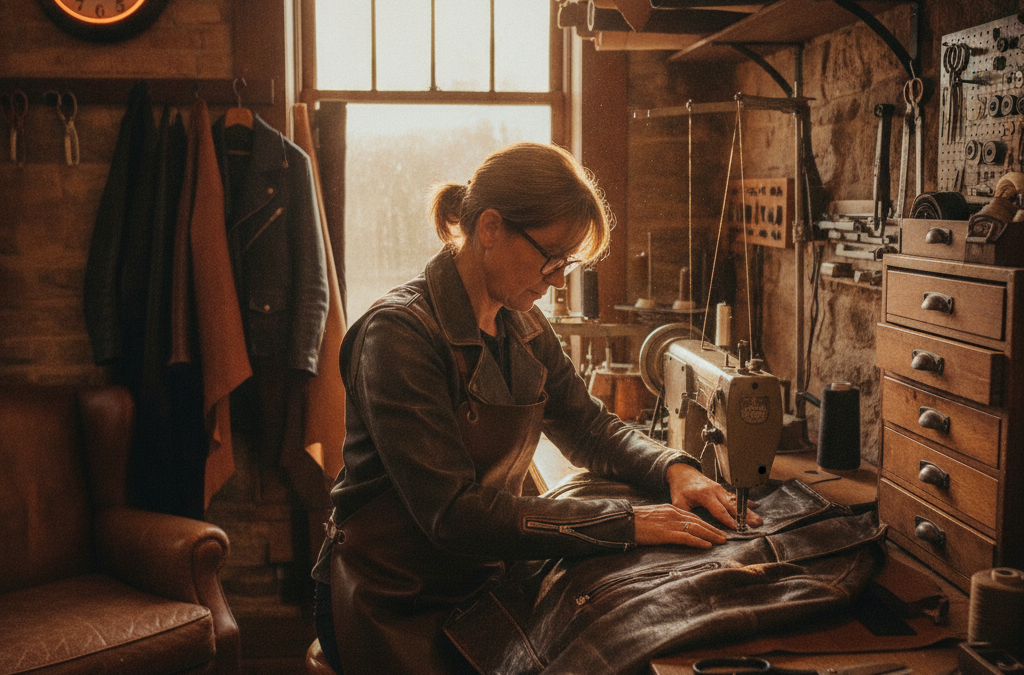
Here’s the thing about leather: every needle hole is permanent. Unlike woven fabric, which has some give and forgiving weave structure, leather doesn’t recover from a misplaced stitch. That means your tailor can’t simply rip out a seam and try again the way they might with a cotton blouse. The old stitch holes stay. That’s not a reason to avoid alterations — it’s a reason to make sure your tailor has real experience working with leather before they take scissors to your jacket.
Genuine leather also varies enormously in weight, tanning, and finish. A buttery lambskin moto jacket behaves completely differently under a needle than a thick cowhide work coat or a bonded-leather blazer from a fast-fashion brand. A tailor who knows leather will assess the piece before committing to the work — and they’ll be honest with you about what’s realistic.
What Kinds of Leather Alterations Are Actually Possible?
More than most people expect. Here’s a practical breakdown of what’s commonly done:
- Taking in the waist or side seams — If your leather jacket is a size or two too large through the body, a tailor can take it in along the side seams to create a closer, more tailored silhouette. This is one of the most popular leather alterations and works well on most jacket styles.
- Shortening sleeves — Sleeve length on a leather jacket can be adjusted, though the approach depends on whether the seam is at the wrist or farther up. A clean finish is very doable in experienced hands.
- Shortening the overall jacket length — This is more involved but possible on many styles. It works best when the bottom hem is relatively simple — not heavily embellished or shaped in a complex curve.
- Replacing a broken zipper — This is one of the most common and most worthwhile leather repairs. A quality zipper replacement on a leather jacket can breathe years of life back into a coat that’s been sitting unworn in your closet. If you’ve been putting this off, don’t — it’s very fixable.
- Repairing or replacing a torn or worn lining — Leather outer shells often outlast their linings by decades. Replacing a shredded silk or polyester lining is straightforward work and makes a jacket feel new again without touching the leather itself.
- Repairing seam splits or small tears — Seams along the shoulders or underarms that have opened up can often be re-stitched with the right thread and technique.
What’s harder — or sometimes not advisable — is letting a leather jacket out to make it larger. Unlike fabric, there’s rarely extra seam allowance hiding inside a leather garment, and adding panels requires careful color and texture matching that doesn’t always work perfectly. It’s possible in some cases, but going down in size is almost always cleaner than going up.
Learn more about leather and outerwear repair services at Amina’s Alterations.
Why You Shouldn’t Just Drop It Off at a General Dry Cleaner
This is worth saying plainly: a lot of dry cleaners in the Danbury and Brewster area offer alterations as a side service — but that doesn’t mean they’re set up for leather. General alteration work and leather work are not the same skill set. A cleaner who hems pants all day may not have a leather needle, the right presser foot, or experience reading how a particular hide will behave when cut. If your leather jacket has any real value — sentimental or monetary — it deserves to go to someone who specializes in outerwear and has worked with leather before, not someone trying it for the first time on your vintage piece.
Is It Worth Repairing or Altering — or Should You Just Buy Something New?
For most leather jackets and coats, the repair-or-replace math strongly favors repair. A quality leather jacket can cost anywhere from a few hundred to well over a thousand dollars new. A zipper replacement, a lining swap, or even a full side-seam take-in is almost certainly going to cost a fraction of that — and you get to keep the piece you already know fits your style, your lifestyle, and maybe even your memories.
There’s also a real sustainability angle here that more and more customers in Fairfield County and across Newtown and Bethel are thinking about. Leather is one of the most durable materials in clothing — a well-made jacket can genuinely last decades with basic care. Throwing one away because of a broken zipper or a fraying lining when both are completely fixable is the kind of thing that, once you realize it, you can’t un-realize.
What to Bring When You Come In for a Leather Consultation
When you bring your leather piece in, wear or bring the clothing you’d typically wear underneath it — whether that’s a chunky sweater for winter or a lighter layer for fall. Fit changes when your underlayers change, and getting the silhouette right means accounting for how you actually wear the jacket. Also, if you know the brand or have any documentation about the leather type, bring it along. It helps with thread and hardware matching.
Be upfront about what you’re hoping for. A good tailor will tell you honestly what’s possible with your specific piece — and if something isn’t advisable, they’ll explain why. That transparency is worth a lot more than someone who just tells you what you want to hear and then delivers a result you’re disappointed with.
Have other repair needs alongside your leather work? See our full repair services page.
Frequently Asked Questions About Leather Jacket Alterations Near Danbury
Can a leather jacket be taken in if it’s too big?
Yes, in most cases. Taking in the side seams of a leather jacket is one of the most common alterations and works well on most styles. The result depends on how much needs to come in and where the bulk of the excess is — your tailor will assess this at the fitting.
How long does a leather alteration typically take?
It varies by the complexity of the work. A zipper replacement might take a week. A full side-seam take-in or lining replacement could take one to two weeks. Rush turnarounds are sometimes possible — ask when you bring the piece in.
Can a tailor match the original thread and hardware on my leather jacket?
Often yes, especially for common zipper styles and thread colors. For more unusual hardware or very specific finishes, your tailor will be upfront about what’s available and what the closest match looks like.
Is bonded or faux leather harder to alter than real leather?
Bonded and faux leather can be trickier because the material tends to crack or peel along cut edges, and the layers don’t always behave the same way as genuine hide. It’s still possible to work with, but it’s worth discussing with your tailor before committing to an alteration.
Do you work on leather outerwear from customers in Brewster or across the CT-NY border?
Absolutely. Amina’s Alterations serves customers from across Putnam County and Fairfield County — including Brewster, Bethel, Newtown, and of course right here in Danbury. Many customers along the I-84 corridor stop in on their way to or from work. Just reach out to schedule a time to bring your piece in.
Bring Your Leather Jacket or Coat In for a Look
If you’ve got a leather jacket sitting in your closet because the zipper gave out, the lining tore, or it just stopped fitting the way it used to — don’t wait any longer. Leather is meant to last, and most of the common problems that sideline a good coat are very fixable in the right hands. Amina’s Alterations is here for exactly this kind of work: honest assessments, careful craftsmanship, and a result you’ll actually be happy with.