Can a Tailor Alter a Mother of the Bride or Groom Dress? What Danbury Women Should Know About Getting the Fit Right
Yes — and honestly, for most mother of the bride and mother of the groom dresses, alterations aren’t just possible, they’re almost expected. These are formal gowns purchased off the rack from department stores, boutiques, or online retailers, and they’re sized the same way everything else is: for an idealized average that doesn’t match most real bodies. If your dress fits beautifully through the hips but gaps at the back zipper, or if the hem drags on the floor in your heels, or if the sleeves sit a little too tight through the upper arm — a skilled tailor in the Danbury area can fix all of that. What matters is giving yourself enough time and choosing a seamstress who understands formal fabric and occasion wear.
Why MOB and MOG Dresses Need Special Attention
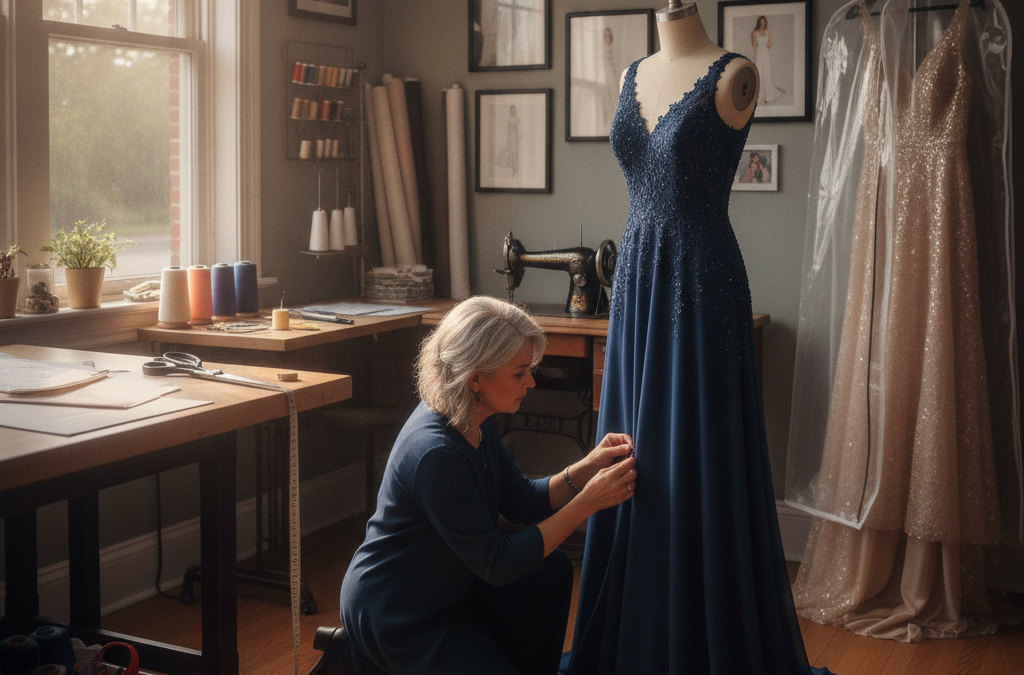
Mother of the bride and groom dresses tend to be more structured than everyday formalwear. Many have built-in boning, bead work, lace overlays, illusion necklines, or chiffon layers — details that look elegant but make alterations more involved than a basic hem on a simple dress. That’s not a reason to panic. It’s just a reason to bring your dress to someone who actually works with these fabrics regularly, rather than a dry cleaner offering alterations as an afterthought.
What’s common with these dresses? A lot. The bodice almost always needs some adjustment — whether that’s taking in the sides, tightening the back, or adding a little ease through the bust or waist. The hem needs to be set at the right length for the shoes you’ll actually be wearing on the day, which means you should bring those shoes to your fitting. If your dress has a lining (and most formal gowns do), any hem adjustment involves shortening the lining too. And if the sleeves or straps don’t sit right on your shoulders, that needs to be addressed early — shoulder alterations affect the fit of everything below them.
Common Alterations for Mother of the Bride and Groom Gowns
Here’s what comes through the door most often for these dresses:
- Taking in the sides or back: Most formal gowns have side seams and a center back seam that can be taken in to slim the silhouette without disturbing the structure of the dress.
- Hemming and floor-length adjustments: Getting the hem right — especially on chiffon or layered skirts — takes care and patience. It should just graze the floor or clear it by an inch, depending on your preference and heel height.
- Strap and sleeve adjustments: Straps that slip, sleeves that bind, or sleeves that are too long are all very fixable. This is especially relevant if you sized up for the hips and the upper half is now too roomy.
- Bust and bodice fitting: Whether you need the bust cups adjusted, the back panel taken in, or the neckline refined, a good tailor works with the dress’s existing structure to achieve a clean result.
- Zipper or closure repair: Zippers in formal gowns — especially the long, invisible type — can be finicky. If your dress has a zipper that sticks, gaps, or doesn’t lie flat, that needs to be addressed before the wedding day.
- Adding or adjusting a modesty panel or lining: If the neckline or back is more open than you’d like, a tailor can add fabric or a lining panel for additional coverage.
If you’re not sure what needs adjusting, that’s fine — bring the dress in and let an experienced seamstress assess it with you. Sometimes what you think is a sizing problem is actually just a hem issue, and sometimes what looks like a simple tuck turns out to involve the whole side seam. You don’t need to diagnose it yourself.
When Should You Start? The Timing Matters More Than You Think
This is the part that catches a lot of mothers by surprise. The bride’s gown gets all the scheduling attention, and the MOB or MOG dress often gets left until the last few weeks before the wedding. That’s a stressful position to put yourself in — especially if you’re in a busy spring wedding season when local tailors in the Danbury and Fairfield County area are already booked out with bridal parties and prom dresses.
A realistic timeline: aim to have your dress in hand at least eight to ten weeks before the wedding. That gives you time for an initial fitting, any adjustments, and a second fitting to confirm the fit before the final hem is completed. If you’re working closer to six weeks out, it’s still manageable — but communicate that timeline upfront so your tailor can prioritize accordingly. If you’re within three weeks of the wedding and just bought your dress, you may need to ask about rush alteration services — which are available but require flexibility on your part.
Women coming from New Milford, Ridgefield, Newtown, or Bethel who are attending weddings in the spring or early summer should plan to book their fitting appointment no later than February or March. The I-84 corridor communities have a lot of weddings concentrated in May and June, and that demand hits local tailors all at once.
What to Bring to Your First Fitting
A few things make your fitting go much more smoothly:
- The shoes you’ll wear on the day. Not similar shoes — the actual shoes. Heel height changes the hem length, and getting that wrong means a second correction.
- The undergarments you plan to wear. A strapless bra, shapewear, or a particular slip can change how a bodice fits and how the dress moves.
- Any photos or inspiration. If you have a vision for how you want the neckline or silhouette to look, bring references. It helps your seamstress understand not just the fit you need but the look you’re going for.
- An honest conversation about your comfort level. You’re going to be on your feet for hours, hugging people, sitting through a reception dinner, and possibly dancing. Your dress needs to move with you, not against you.
Is a MOB or MOG Dress Different From a Regular Formal Dress to Alter?
In some ways, yes. These gowns are often purchased from bridal-adjacent retailers — brands that design specifically for wedding occasion wear — so the fabrics and construction tend to be more formal than what you’d find in a cocktail dress or evening gown from a department store. Lace, chiffon, crepe, and satin-backed fabrics are common, and they each behave differently under the needle. That’s one reason to work with a tailor who has genuine experience with bridal and formal gown alterations, not just someone who can handle a hem on denim.
At Amina’s Alterations, this kind of work is a regular part of the schedule — not an occasional exception. If you want to see the kind of results that come from careful, experienced hands, the bridal alterations page gives a sense of the craftsmanship that goes into every formal gown that comes through the shop.
Frequently Asked Questions
How much does it cost to alter a mother of the bride or groom dress?
It depends on what needs to be done and the complexity of the fabric and construction. A simple hem on a chiffon gown costs more than a hem on a jersey dress because the layers and finishing take more time. A full side-seam take-in on a beaded or structured gown involves more work than the same adjustment on a simple crepe dress. The best way to get an accurate sense of cost is to bring the dress in for a fitting and get a quote based on the actual alterations needed. There’s no charge just to talk through what the dress needs.
Can a tailor let out a MOB dress if it’s too tight?
Sometimes, yes — but it depends on the seam allowances built into the dress and how much additional fabric is available. Many formal gowns are cut with minimal seam allowance, which limits how much they can be let out. This is one reason it’s worth trying on a dress that fits your largest measurement and then having it taken in rather than buying the smaller size and hoping for extra room. When in doubt, ask your tailor before you purchase.
What if my dress has intricate beading or lace that makes alterations complicated?
Beading and lace require more careful handling, but they don’t make alterations impossible. A tailor with formal gown experience knows how to work around decorative elements — or, when necessary, how to remove beading, make the alteration, and reattach it cleanly. It does add time and may affect the cost, so be upfront about the dress construction when you book your appointment.
I ordered my dress online and it doesn’t fit at all. Can it still be altered?
Usually, yes — though the amount of alteration possible depends on the dress’s construction and seam allowances. Online sizing for formal gowns is notoriously inconsistent, and this is one of the most common situations that brings women into the shop. Bring the dress in, and a tailor can tell you what’s realistic after seeing it in person.
Do I need multiple fittings, or can it be done in one visit?
For most mother of the bride or groom dresses, plan on at least two fittings — one to assess and pin the alterations, and one to confirm the result before the final finishing. If there’s a lot of work involved or the dress is particularly complex, a third fitting isn’t unusual. Think of it as an investment in getting it exactly right, not extra inconvenience.
Ready to Book Your Fitting?
Your child’s wedding day is one of those moments you’ll have photographs of for the rest of your life. The way your dress fits — how it moves, how confident you feel in it, whether you’re tugging at the neckline or standing tall — matters. A skilled tailor can make the difference between a dress you tolerate and one you love.
Amina’s Alterations works with mothers of the bride and groom from across the Greater Danbury area — Ridgefield, New Milford, Bethel, Newtown, and beyond — and understands both the timeline pressures of wedding season and the care that formal gowns require. Reach out through the contact page to schedule your fitting appointment or ask any questions about your dress. The sooner you come in, the more relaxed the whole process will be.